
Global Surgery Data
A Decade in the Making
The G4 Alliance has launched the global pilot of the Operative Encounter Module of the WHO Clinical Registry — turning routine operative data into better quality, safer care and stronger surgical systems.
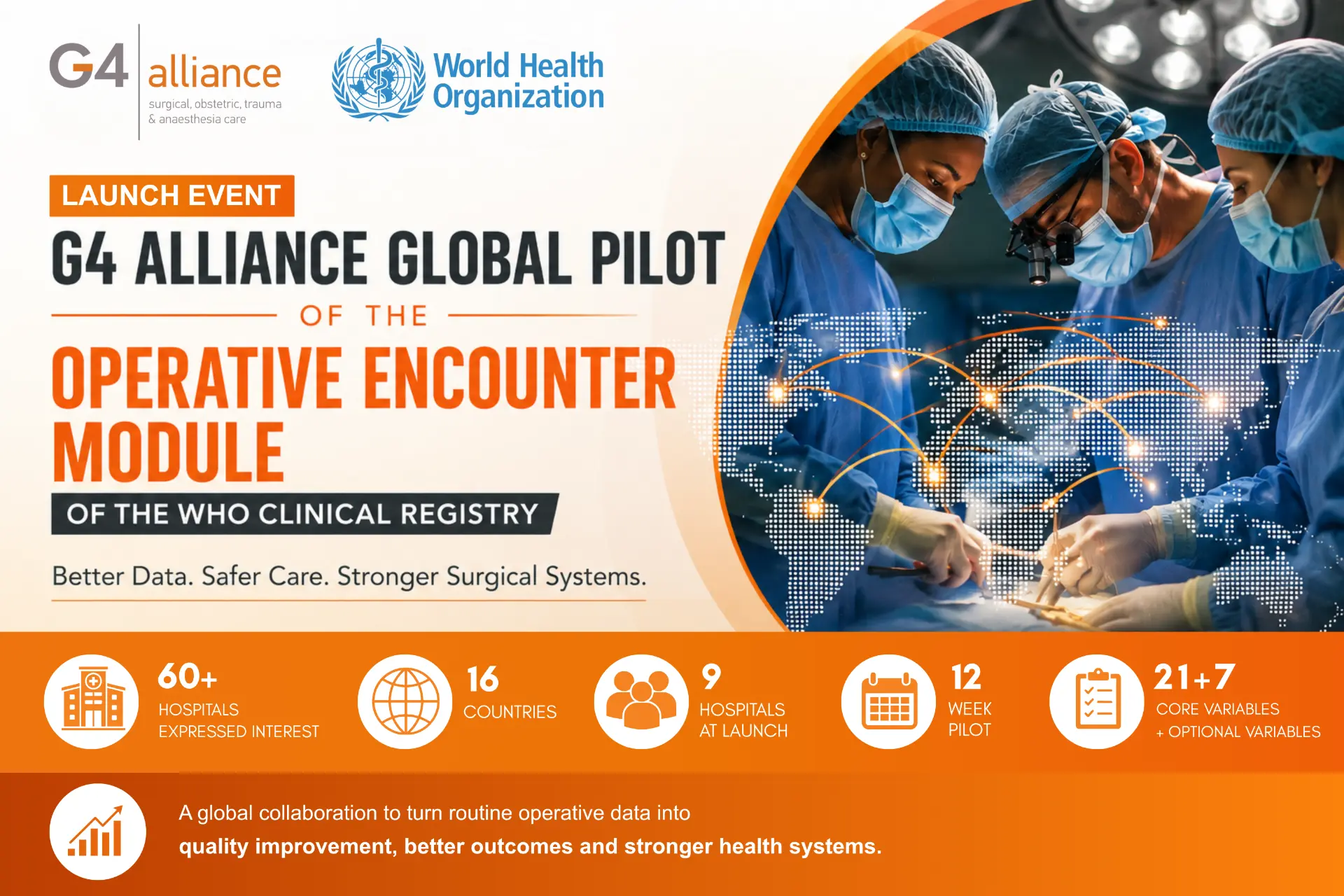
After nearly ten years of development, collaboration and testing, the G4 Alliance has launched the global pilot of the Operative Encounter Module of the World Health Organization Clinical Registry, bringing participating hospitals together around a shared goal: turning routine operative data into better quality, safer care and stronger surgical systems.
This is a pilot phase. The Operative Encounter Module is currently being tested and evaluated through a 12-week global pilot. Following completion and evaluation of the pilot, the intention is to scale the initiative for broader global rollout.
60+
Hospitals expressed interest
16
Countries
9
Hospitals at launch
12
Week pilot
21+7
Core + optional variables
The launch brought together representatives from the World Health Organization (WHO), the G4 Alliance, participating hospitals and implementation partners to introduce the module, demonstrate its practical use, and outline the 12-week global pilot and accompanying Community of Practice.
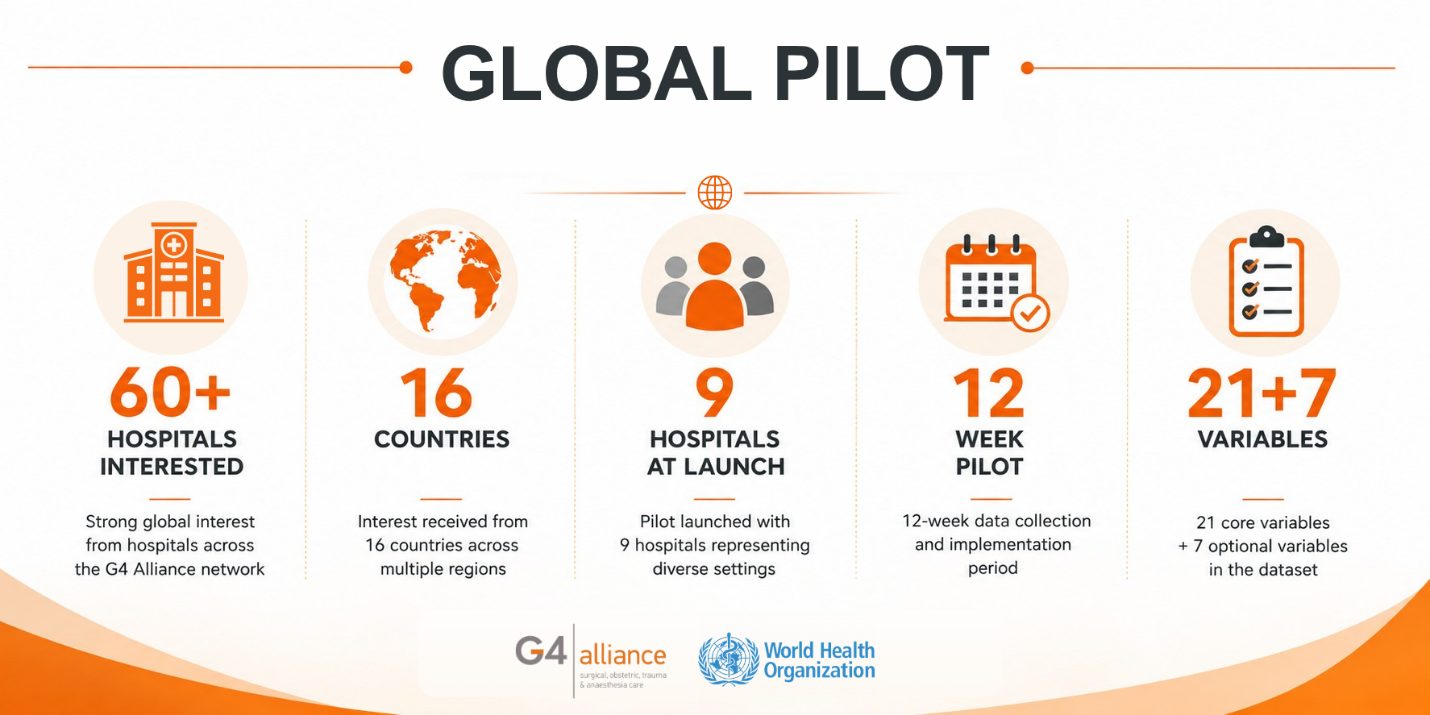
Interest in the initiative has already been substantial. An open call through the G4 Alliance network generated expressions of interest from more than 60 hospitals across 16 countries, representing a wide range of facility levels and health-system settings. The pilot launched with nine hospitals across diverse health-system settings and will run for 12 weeks.
Why Operative Data Matter
Opening the session from the World Health Organization, Dr. Vanessa Naidoo, representing WHO’s Integrated Services and Models of Care team at headquarters in Geneva, placed the initiative within the wider goal of Universal Health Coverage and WHO’s focus on quality and safety.
She emphasized that data are central not only to understanding health systems, but to improving the quality of clinical care. WHO’s Clinical Registry has evolved from earlier work in trauma care to include an Emergency Care Module and now the Operative Encounter Module.
The challenge is familiar across many health systems. Hospitals may provide thousands of operations every year while still lacking a standardized way to answer basic questions about surgical volume, case mix, delays, safety processes and outcomes. The Operative Encounter Module is designed to help close that gap.
Rather than creating a large research database, the module focuses on a minimum standardized dataset for routine operative care, allowing facilities to collect information that can be used for monitoring, quality improvement and health-system decision-making.
A WHO-Hosted Platform Designed for Practical Use
The WHO Clinical Registry operates on DHIS2, an open-source health information platform already widely used internationally. WHO hosts and maintains its own implementation through the WHO Integrated Data Platform. For participating facilities, this removes an important barrier: hospitals do not need to establish and maintain their own registry infrastructure simply to begin collecting standardized operative data.
The platform is free to participating facilities, while ownership of facility data remains with the facility. Access can be role-based, with individual facilities retaining access to their case-level information while aggregated dashboards support broader monitoring. Importantly for settings where connectivity is inconsistent, the system also supports offline data collection through its Android application.
But the most important feature may be what happens after the data are entered. Built-in dashboards and audit filters allow teams to move from data collection to action — monitoring indicators, identifying cases that may warrant review, examining contributing factors, implementing corrective measures, and then using subsequent data to determine whether those changes are working.
Nearly Ten Years of Work Behind the Launch
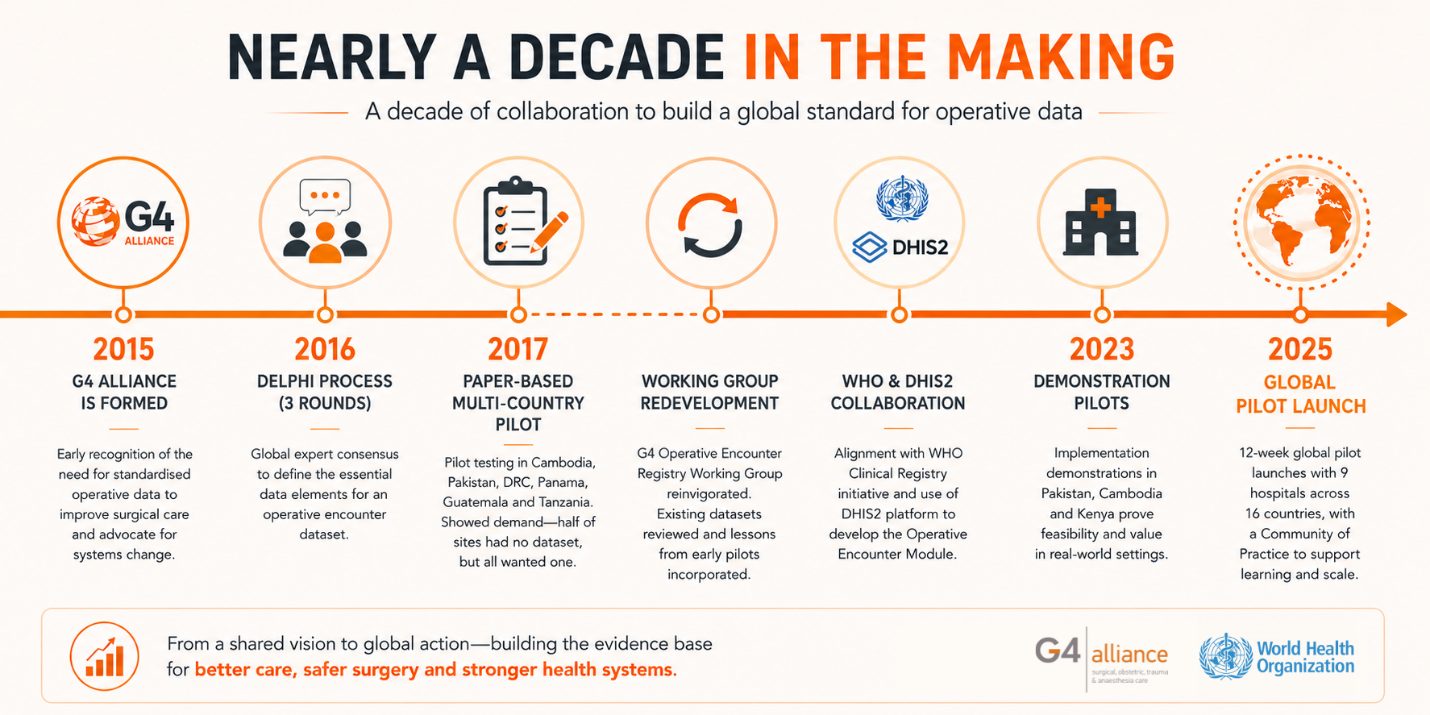
Dr. Neil Wetzig, who led the session and has played a central role in the initiative, traced the development of the module back to early G4 working groups focused on perioperative data. Three rounds of a Delphi process were conducted in 2016, followed by a paper-based pilot in 2017 across countries including Cambodia, Pakistan, the Democratic Republic of Congo, Panama, Guatemala and Tanzania.
The early work revealed both the challenge and the demand: half of participating sites did not have an existing dataset, yet all expressed a desire for one. The working group was subsequently revitalized, existing datasets were reviewed, and the initiative increasingly aligned with WHO’s development of clinical registries using DHIS2.
The result is a deliberately focused module of 21 core variables and seven optional variables, capturing information on perioperative processes, outcomes and provider cadres. Simplicity has remained a guiding principle — practical enough for routine use across very different environments, including lower-level health facilities, while still producing meaningful information for quality improvement and health-system planning.
Designed for the People Who Will Actually Use It
Dr. Christopher Dodgion walked participants through the practical structure of the module and what implementation will look like at facility level. Each operative encounter generates one record. Most information is entered through standardized drop-down fields, reducing variation in terminology and making data more comparable between facilities.
The module includes 249 procedures and 206 indications, organized through 12 specialty categories to make data entry manageable. The pilot is also expected to identify procedures, indications or definitions that may need refinement before broader implementation. Once teams become familiar with the platform, entering the core dataset is expected to take approximately two minutes per case.
The value returned to hospitals is considerably greater. Five dashboard areas are being developed to provide views of facility activity, safety and quality, case mix, data quality and pilot-level implementation. More than 29 visualizations can help facilities follow indicators such as surgical volume, mortality, WHO Surgical Safety Checklist use, time to theatre, case mix and complications.
Audit filters add another layer. Cases such as mortality among low-risk patients or other unexpected outcomes can be flagged for review, helping teams identify potential system problems and translate routine data into targeted quality-improvement activity.
SCOPE: Building a Community Around the Data
Technology alone will not improve surgical care. Natalie Sheneman, Advocacy Manager at the G4 Alliance, introduced the second major component of the pilot: a virtual Community of Practice developed using the Project ECHO model.
The G4 Alliance ECHO SCOPE Community of Practice, focused on operative data for policy and equity, will connect participating teams through regular virtual sessions during the pilot. Rather than functioning as a one-way training program, SCOPE is designed around peer-to-peer learning — hospitals bring implementation challenges to the group, discuss workflows, work through questions about individual variables, learn to use dashboards and share solutions with colleagues working in very different environments.
This creates two complementary components: the WHO Clinical Registry provides the infrastructure for collecting and analyzing operative data, while the G4 Alliance Community of Practice helps teams learn how to implement the module and use the information effectively.
Case Study · Peshawar, Pakistan
From 271 cases to more than 10,000
Demonstration of the module’s potential came from Dr. Almas Khattak of Northwest General Hospital in Peshawar, Pakistan — strong evidence in the session that this initiative can change practice.
271
Operative encounters during the six-week 2023 demonstration
10,000+
Encounters captured once integrated into routine HMIS
56% → 96.8%
Pulse oximetry documentation after review and corrective action
Northwest General Hospital participated in a six-week demonstration project in 2023 alongside sites in Cambodia and Kenya. When the demonstration ended, the hospital asked to continue — the team could see the value of the data.
Instead of maintaining the registry as a separate system, the hospital integrated the operative variables into its existing hospital management information system. What began as a short demonstration grew into routine data collection covering more than 10,000 operative encounters.
The change allowed the hospital to answer questions that had previously been difficult to address systematically: how many operations are being performed, which specialties account for the greatest volume, how consistently ASA status is documented, whether teams are using the WHO Surgical Safety Checklist, how long emergency patients wait for surgery, and which cases should trigger review.
Closed-loop quality improvement
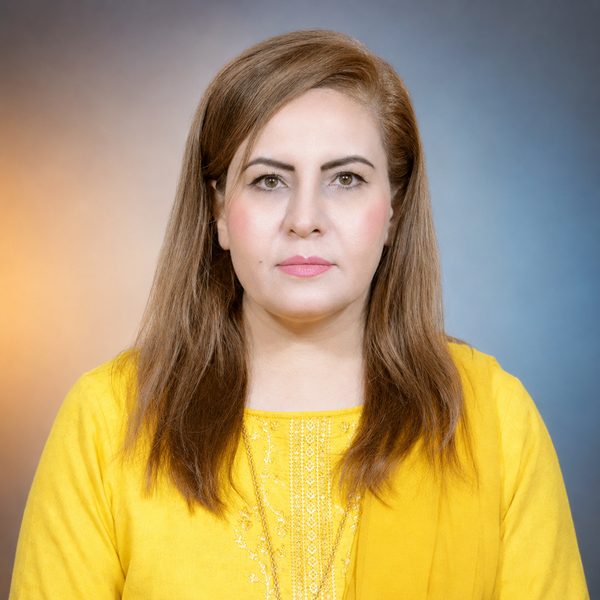
Dr. Almas Khattak
G4 Alliance | Northwest General Hospital, Peshawar
“A registry matters when it changes what a hospital does.”
The registry also brought attention to referral pathways, operative delays, risk-stratified mortality, length of stay and Caesarean section rates. Professor Tariq Khan, whose institutional leadership in the Pakistan implementation was acknowledged during the session, highlighted two outcomes: its contribution to patient safety, and its value as a training tool for young professionals in surgery, obstetrics and trauma care.
One Pilot, Very Different Health Systems
A representative from Komfo Anokye Teaching Hospital in Ghana, a large teaching facility performing hundreds of operations each month, described plans to use registry data for clinical care, morbidity and mortality meetings, postgraduate training and quality-improvement interventions.
From Kabul, Afghanistan, a representative of a tertiary hospital described the potential of standardized operative data to provide a clearer picture of surgical workload, disease patterns, complications and outcomes. A participating team from far-western Nepal offered a very different perspective: a resource-constrained primary-level hospital providing essential general surgery, orthopaedic trauma and obstetric services — illustrating one of the central ambitions of the module.
Dr. Rick Henker discussed implementation work in Cambodia and Lao PDR, highlighting how the module aligns with national efforts around quality improvement, patient safety and hospital accreditation. From India, Dr. Priya Natani, speaking on behalf of the WHO Collaborating Centre for Emergency, Critical and Operative Care at The George Institute, shared experience from a hub-and-spoke implementation involving facilities across India and Sierra Leone.
Together, these experiences demonstrate why a global pilot is necessary. The same minimum dataset must be useful across hospitals with vastly different patient volumes, workforce structures, infrastructure and digital capacity.
From Pilot to Scale
Simona Marinescu, CEO of the International Data Center Authority, congratulated the teams involved and discussed the emerging dialogue between IDCA and the G4 Alliance around moving from pilot implementation toward scale. Her remarks highlighted questions that will become increasingly important as the initiative grows, including digital infrastructure, interoperability, data governance, national ownership, sustainability, training and the financing required for implementation at scale.
As Dr. Wetzig noted in closing, the launch is not the end of the development process. It is the point at which years of consensus-building, technical development and early testing meet the realities of implementation. What happens next will be shaped by the hospitals using the module.
Turning Data Into Better Care
The significance of the Operative Encounter Module lies less in the number of variables it collects than in what those variables can make possible. A hospital that can reliably measure its operative activity can begin to see patterns. A team that can see those patterns can identify problems. A health system that can identify those problems has a stronger foundation for improving quality, planning services and advocating for resources.
Nearly ten years after the first working groups began asking how operative care could be measured consistently, participating hospitals around the world are beginning to put that idea into practice.
The pilot has begun. The next step is turning the data into action.
Featured speakers
Voices from the launch
- VN
Dr. Vanessa Naidoo
World Health Organization

Dr. Neil Wetzig
G4 Alliance
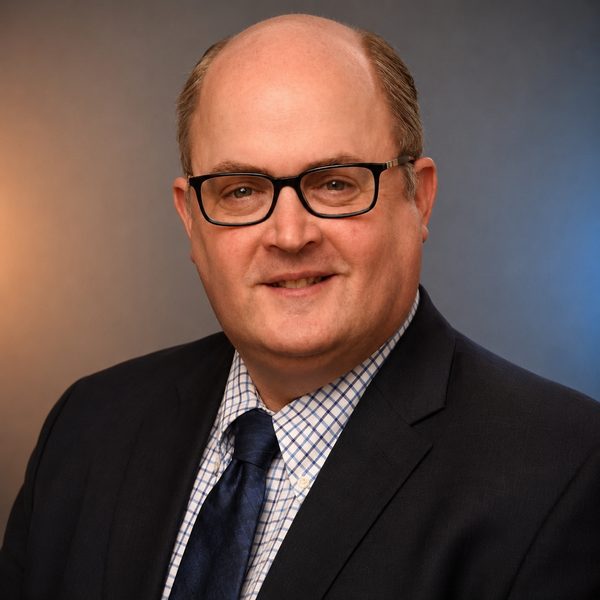
Colin McIff
G4 Alliance

Dr. Christopher Dodgion
Operative Encounter Module

Natalie Sheneman
G4 Alliance
Dr. Almas Khattak
G4 Alliance | Northwest General Hospital
- SM
Simona Marinescu
International Data Center Authority